Cookies

We use cookies and related technologies to personalize and enhance your experience. By using this site you agree to the use of cookies and related tracking technologies.

Privacy Policy

Options

Events

2016 Fall Lecture Series Fort Plain Museum

Fort Plain Museum (opens in a new tab)

389 Canal Street, Fort Plain, NY 13339

fortplainmuseum@yahoo.com (opens in a new tab)

518-774-5669

Lectures start at 7:00pm

Admission is free but donations are appreciated.

fort-plain-10_13Thursday, October 13

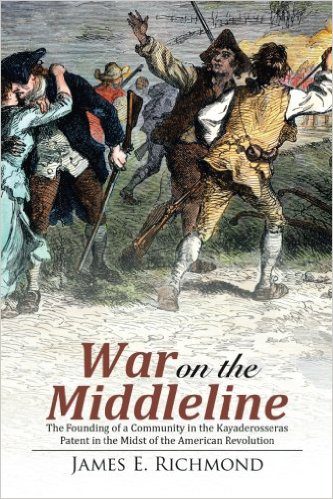
“War on the Middleline – The Founding of a Community in the Kayaderosseras Patent in the Midst of the American Revolution” by James E. Richmond

Thursday, October 20

“Sir William Johnson and the Evolution of the Mohawk Valley Fur Trade” by Michael Perazzini fort-plain-10_20

Thursday, October 27

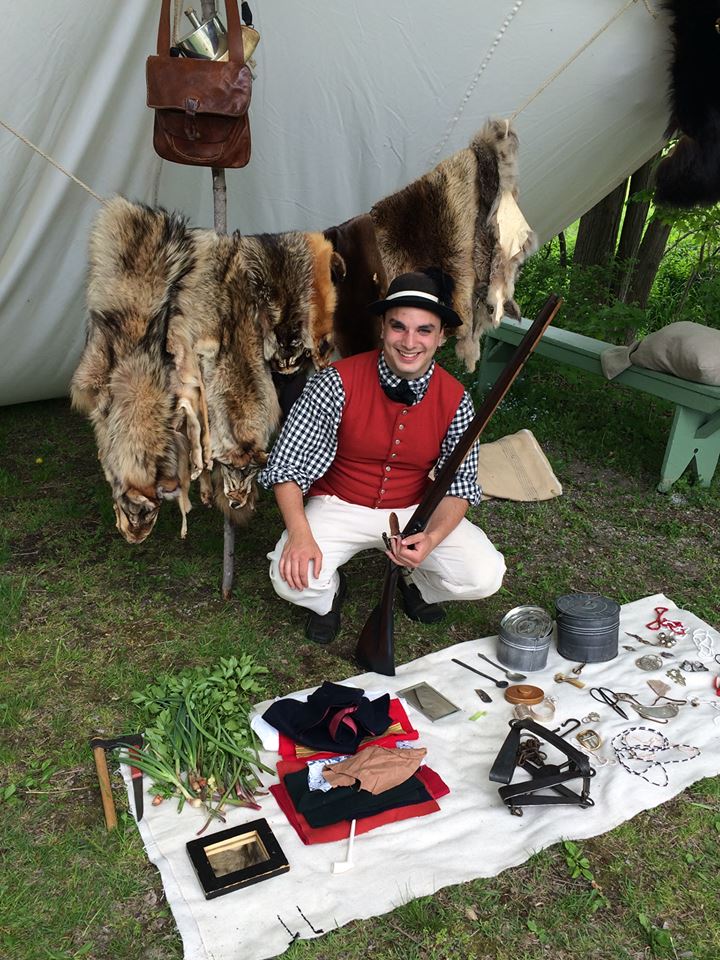
“350 Years of Firearms” including the Hamilton/Burr Dueling Pistols by John Phillips (Phillips will discuss and showcase replica Hamilton/Burr Dueling Pistols made before the American Revolution Bicentennial)

Thursday, November 3

“Forgotten Pioneers: African Americans in the Mohawk Valley” by Wayne Lenig and “West African Drumming in Colonial America” (drumming demonstrations included) by Charles Lenig


Storyteller Tim Lowry to Perform At Schoharie Crossing State Historic Site

Nationally known storyteller Tim Lowry will perform at Schoharie Crossing State Historic Site on Sunday, August 28 at 6:00 PM as part of the annual Not Just for Kids Storytelling series.  His performance will take place outdoors in front of the Schoharie Crossing Visitor Center, 129 Schoharie Street, Fort Hunter, NY.  The show will move indoors in case of rain. Guests are invited to chat and enjoy refreshments after the show. The event is free and open to the public.

With a Southern manner and droll side-wit, Tim Lowry is equally at home in an Appalachian log cabin, Mandan wigwam, New York Theater, or Texas ranch house. Lowry grew up in southeastern Kentucky where he learned the art of storytelling from Appalachian folk who spun yarns and told tales to entertain, teach morals, and pass along local history. Currently residing in Summerville, South Carolina, Lowry has been entertaining audiences with mixture of folk tales and personal narrative for 16 years.

The last performance of The Not Just for Kids Storytelling series takes place on September 11 when Margaret French will present a program entitled, “All Too Human, Stories of Laughter, Wit and Folly”.

Saratoga Arts made this program possible with a Community Arts Grant funded by the New York State Council on the Arts with the support of Governor Andrew Cuomo and the New York State Legislature. The program is also supported by Stewart’s Shops, L’Ultimo Restaurant, the Garden Bug, and Karen’s Produce.

For more information about these events and more, please call the Visitor Center at (518) 829-7516, email SchoharieCrossing@parks.ny.gov, or visit the Facebook page at Schoharie Crossing State Historic Site

The New York State Office of Parks, Recreation and Historic Preservation oversees 180 state parks and 35 historic sites, which are visited by 60 million people annually. For more information on any of these recreation areas, call 518-474-0456 or visit www.nysparks.com, connect on Facebook, or follow on Twitter.


History & Hearsay

History is full of mysteries and lies, not just facts.  Take the tour and see if you can guess which tale is NOT true.  Join site staff David for an exclusive tour of Schoharie Crossing on Tuesday, August 16th from 6:30p-8:30pm and learn interesting bits of history as well as mystery along the canal.  Test your intuition, detective skills, and see if you can spot the fib!

This 1.5 mile walk will take participants around features of the canal and through parts of a once bustling industrial town.  After the tour, enjoy some refreshments in the Visitor Center as you check out the exhibit, “Little Short of Madness,” discuss with others which tale might be the lie, and then stick around for the reveal!

Pre-registration is encouraged as space is limited.  A link to register online can be found on the site’s Facebook event page.  For more information or to register contact David at (518) 829-7516 or david.brooks@parks.ny.gov

For information about this event or the site, please call the Visitor Center at (518) 829-7516, or email SchoharieCrossing@parks.ny.gov. For more information about New York State Parks, visit the website at www.nysparks.com.


Wildlife Wednesday Walk with Anita Sanchez

Wildlife Wednesday Walk with Anita Sanchez

At Schoharie Crossing State Historic Site

Schoharie Crossing State Historic Site will host environmental educator and author Anita Sanchez for a Wildlife Wednesday plant program on August 10th at 6pm. This walk will explore different areas of the historic site, identify both common and uncommon flowers, and discuss their interrelationships with wildlife, especially birds and butterflies.  Sanchez will also talk about how people have used plants throughout history for medicine, food, and magic.

The walk will take place along the banks of Schoharie Creek and on historic site trails, which were formerly the towpath for the Erie Canal.  The program will meet outside the Visitor Center at 129 Schoharie Street, Fort Hunter.  There is a $3.00 suggested donation. 

Anita Sanchez worked as an environmental educator for the New York State Department of Environmental Conservation at education centers across the state. She now is a free-lance educator, providing programs for schools, libraries, museums, botanical gardens, and arboreta.  Also a successful author and champion of unloved plants, she has written, “The Teeth of the Lion: The Story of the Beloved and Despised Dandelion” and most recently, “Leaflets Three, Let it Be! The Story of Poison Ivy”.

For information about this event and more, please call the Visitor Center at (518) 829-7516, email SchoharieCrossing@parks.ny.gov, or visit their Facebook page.


CURRYTOWN SET AFIRE

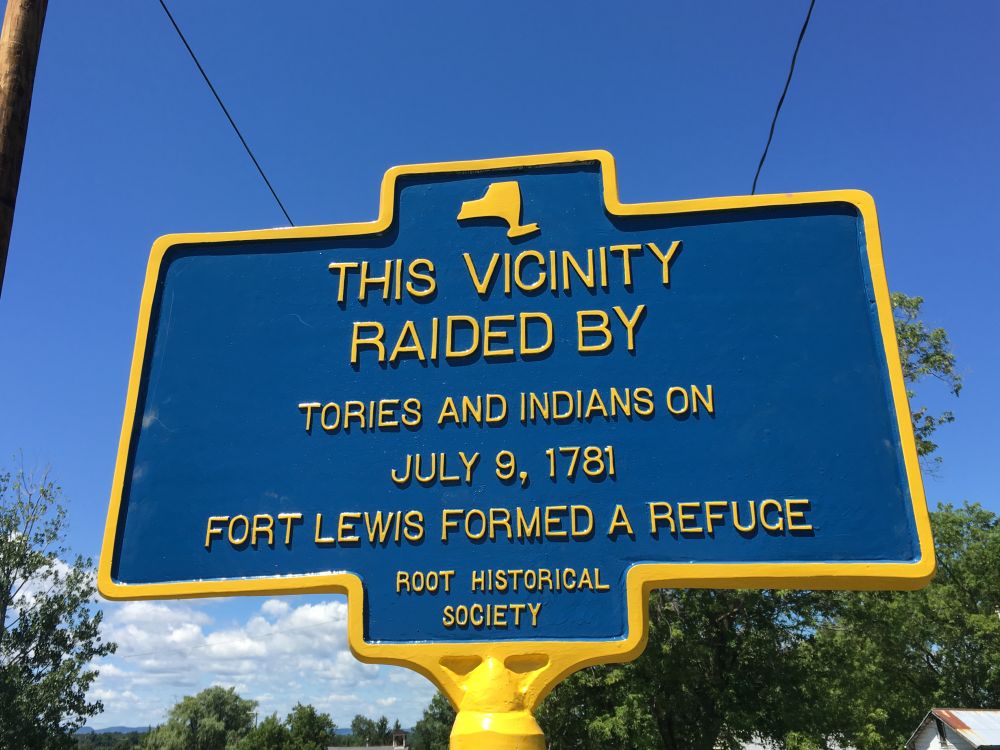
Currytown Historical MarkerOn the morning of July 9, 1781 the residents of the Currytown settlement did not know their lives would forever be changed.  The farming community was abundant with crops.  By the end of the day, the fields and buildings would be burned to the ground by a Mohawk Indian raiding party of 300 Iroquois loyal to the British and led by a low ranking Tory named John Doxtader.

With little options to hide, the residents of Currytown had only the stockaded residence of Henry Lewis to flee to or risk hiding in their attics and root cellars.  For some, “Fort Lewis” was too far to reach.  Many were killed, scalped, or saw the destruction of their homes as they went up in flames.

Colonel Willett at Fort Plain would see the smoke, pursue and overtake the Mohawks, but not before the Currytown families suffered tragedy.  In the fall, a much larger force made up of British regulars, loyalists, and Mohawk warriors entered the valley, several hundred strong.  On October 24, 1781, they once again “captured” Currytown, but did not burn it to prevent rising smoke from warning Willett and the militia of the raid. The raid was discovered by a pair of militia scouts and warning of their presence was spread throughout the county. Before Willett was able to organize the valley’s defense, the raiding party attacked a number of small towns and homesteads, burning buildings and killing settlers along the way.

During the weekend of August 27 and 28, 2016, an event to commemorate the 135th Anniversary of the Currytown Raids is planned for reenactors and sutlers on site selling their wares from the 1780s.  On Saturday, August 27 the Colonial camps will be open for the public to see what life was like in the 1780s.  The Root Currytown ButtonHistorical Society (opens in a new tab) will be having a chicken barbeque at the Currytown Reformed Church, 665 State Highway 162, Sprakers.  Serving will start at 2:00pm, $7.00 for half chicken and $9.00 for a full meal.  On Sunday, August 28 the raid will commence at 2:00pm for spectators followed by an ice cream social at the Currytown Reformed Church starting at 4:00pm, $3.00 for ice cream and cake/pie.  Additionally, commemorative buttons will be sold throughout the weekend for $3.00 each.

Off street parking will be available and marked on Darrow Road and shuttle service will also be available for those using the lots away from the camps.  Please refrain from parking on State Highway 162.  For more information, please contact Bill Maring, Town of Root Historian, at (518) 922-5606.

Find Your Own Path Through History at Schoharie Crossing

MVPTH logoCelebrate history and create memories during this year’s Path Through History Weekend on June 18 and 19 at Schoharie Crossing State Historic Site (opens in a new tab) .  The Path Through History (opens in a new tab) program is an established state-wide series of events that consists of many organizations that participate in a focus on local history.

During the last almost two centuries, the Erie Canal has been the waterway used as the path for so many traveling through the wonderful Mohawk Valley (opens in a new tab) and across New York State.  Schoharie Crossing is the only location where all three of the major phases of the canal can be witnessed.

For 2016 the site will be holding a Schoharie Crossing Scavenger Hunt that will ask questions pertaining to all aspects of this great historic site.  Questions range from historical facts, to plant and animal spotting as well as getting you to really seek out things you may otherwise miss on your visit.  The challenge is worth it and a whole lot of fun too!

The site will be hosting Scavenger Hunt participants on Friday, Saturday and Sunday.  The passport can be turned into Visitor Center staff during operating hours or sent to the site by no later than July 1st.  A winner will be selected at random and an announcement made.

To print a copy of the 2016 Mohawk Valley Path Through History Schoharie Crossing Scavenger Hunt Passport visit the New York State Parks webpage for Schoharie Crossing or pick one up at the Visitor Center.  Discover fascinating facts about the Erie Canal and Fort Hunter as you answer questions for a chance to win a prize package.  Please – only one entry per person.  Get out there, Explore and Enjoy!  PathScavHunt (opens in a new tab)

For more information about this event and more, please call the Visitor Center at (518) 829-7516 or email: SchoharieCrossing@parks.ny.gov (opens in a new tab) .

Annual Rhubarb Festival at Nellis Tavern

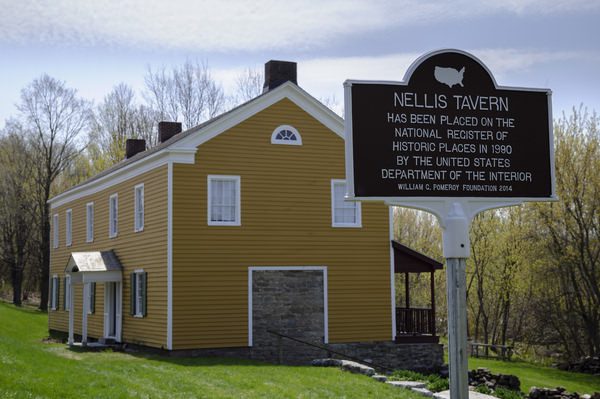
The Palatine Settlement Society (opens in a new tab) trustees have planned the 20th Annual Rhubarb Festival. It will be held on Sunday June 5, 2016, at the historic 1747 Nellis 150501_MitchW_0104Tavern, NYS Rt. 5 (east), St. Johnsville, NY from 11:00 AM – 4:00 PM. The rhubarb pie baking contest with guest judges starts at 12:00 PM sharp. Lunch items along with all kinds of rhubarb delicacies will be available. Musical entertainment will be provided by Revisions, a barbershop quartet from 1:00 to 3:00 PM.  Admission is free but donations are always welcome. Proceeds go toward the continuing restoration and preservation of the 1747 Nellis Tavern, including our wall stenciling restoration. Tours will be available.

For more information, contact Mary Davis, President; 315-866-2619

Schoharie Crossing Annual Winter Writing Contest

Schoharie Crossing writing emblemSchoharie Crossing State Historic Site (opens in a new tab) is once again conducting a Winter Writing Contest (opens in a new tab) .  This year the contest is asking for poems to be written by children as well as adults. Local judges will read, review and select winners for each of the three categories: Child (up to 12 years old), Young Adult (13-17), and Adult (18 and up). 

Traveling on the canal was always quite the experience.  It could often be difficult and dangerous or it could also be a way to a better life.  That diversity of experiences from Albany to Buffalo along the artificial river meant that each person had a unique story to tell.  For this year’s contest, the site is asking that submissions of poems that express your own interpretation of a travelers experience on the Erie Canal be sent in no later than 5pm on April 6th.

Each poem should demonstrate an understanding of the social, economic and engineering systems that were part of traveling across New York State on the Erie Canal.  Your poem could be set during any era of canal travel, from the 1820’s up until today.

Prizes this year are $100 each for the Adult category, Young Adult and the child category.  Submissions may be sent via mail to Schoharie Crossing Writing Contest, P.O. Box 140, Fort Hunter, NY 12069, or electronically to: SchoharieCrossing@parks.ny.gov

For contest topics, rules and guidelines or other information, please contact the site or find us on Facebook (opens in a new tab) .  (518) 829-7516.


African American Life & Abolitionist Movement in Canajoharie

A Walking Tour of Canajoharie

African American Life and the Abolitionist Movement in Canajoharie

Henry & Mary Miller (Cliff St.): Both born into slavery, Henry and Mary (Garlock) Miller were emancipated with the 1827 law.  They lived on this site where they raised a large family.

Peter & Eliza (Miller) Skinner (Cliff St.): Peter and Eliza Skinner represent the successful integration of many African Americans, born of enslaved parents, into the community life of these Mohawk Valley villages.  Both Peter and Eliza became property owners and successful business people in Canajoharie.

African Methodist Episcopal (A.M.E.) Zion Church (Cliff St.): Five African American men, representing African Americans who had been meeting for some time in a local church assembled to incorporate the African Methodist Episcopal Zion Church at Canajoharie.  They purchased a plot of land on Cliff Street, just east of the home of Peter and Eliza Skinner.  Whether or not they actually built a church there is not known.  This church incorporated in 1857.  The denomination was synonymous with notable abolitionists such as Harriet Tubman, Frederick Douglass, and Rev. Jermaine Loguen.  Rev. Richard Eastup, a freedom seeker himself, was appointed to oversee the Canajoharie mission church i 1862.

Charles Walter & Frances (Skinner) Denning (Cliff St.): Built sometime after 1868, this house was the home of Walter and Frances Denning, African Americans, by 1905.  Walter Denning was a Civil War veteran who became a prominent mason and brick worker in Canajoharie, who most likely used limestone quarried near this house.  Denning’s father actively shepherded freedom seekers from his home near Elmira.  Frances Skinner Denning grew up with her parents in a house just east on Cliff Street.

Philip Phillips (corner of Wheeler & Otsego Streets): As the generation of African Americans who were once enslaved, Philip and Eunice Phillips represent the modest success that steady work and home ownership provided to people who spanned the experience of both slavery and freedom in the Mohawk Valley in the mid-nineteenth century.

Canajoharie Academy (Otsego St.): As headmistress of the female department, Susan B. Anthony taught from 1846-1849 in the building that stood on this spot.  One cousin called her “the smartest woman in Canajoharie.”  Here she began her public career as a reformer, when she gave her first lecture for temperance on March 2, 1849.  She resigned in 1849 to move to Rochester, where she lived with her parents and began her career in abolitionism and women’s rights.  The current structure was designed by Archimedes Russell and built in 1892.

Ehle Block (Rock & Cliff Streets): erected 1876 by Eliza Ehle replacing an earlier home that had burned; housed various businesses including Peter Skinner’s barbershop and his wife Eliza Skinner’s ice cream parlor.

Reformed Church (Front St.): Like many churches in Montgomery County, European Americans dominated this congregation, but many African Americans  were also members.  Philip Phillips and his wife Eunice Van Horn Phillips were both members of this church; Philip Phillips was also sexton.

United Methodist Church: organized in 1828 in Palatine Bridge; built on this site in 1841; new structure erected after 1915 fire; had antislavery lectures including former slave Henry Walton Bibb. Many black families had their children baptized here.

John C. Smith: As a teacher and later President of the Canajoharie National Bank, Smith was one of those Canajoharie residents who, in 1850, signed and sent a petition to Congress denouncing slavery and forbade further admittance of any slave state to the Union.

Shaper Block (northwest corner of Church & Mohawk Streets): first building burned 1891; housed the barbershop of James Teboet.  The second building on this site, constructed of brick, burned and was razed in 1973.

George & Eleanor (Read) Caldwell (Mohawk St.): Susan B. Anthony first stayed at the home of her cousin Eleanor (Read) and George Caldwell during her tenure at the Canajoharie Academy.  As a conservative Democrat, George Caldwell introduced Anthony to local and state wide political debates, helping Anthony to define her own commitment to abolitionism.

James & Sarah Teboet/John & Mary Cromwell (Mohawk St.): James Teboet learned the skill to be a barber and practiced his trade in the Sharper building just down the street to the east of his home.  John Cromwell, residing in the same house, learned to play the violin while a slave in Schoharie County.  Hi s orchestra was well known throughout the Mohawk Valley playing at many halls and events.

Chester “Bromley” & Lizzie (Phillips) Hoke (Mohawk St.): Bromley Hoke and Elizabeth Phillips Hoke represent the integral part of that African Americans, descendants of grandparents who had been locally enslaved, played in the economic and social development of the Mohawk Valley, as well as the close ties of family and neighborhood that sustained African American families as they moved from slavery into freedom.

George Gilbert (Mohawk St.): Gilbert worked as a teamster and served as trustee for the A.M.E. Zion Church during its incorporation and its dissolution.  Also a member of the St. Mark’s Lutheran Church, Gilbert was a prominent member of Canajoharie’s black residents.

For a copy of the Canajoharie tour map and more information on the Underground Railroad, Abolitionism and African American Life in Montgomery County project, please contact the Montgomery County Department of History & Archives (opens in a new tab) at (518) 853-8186.